

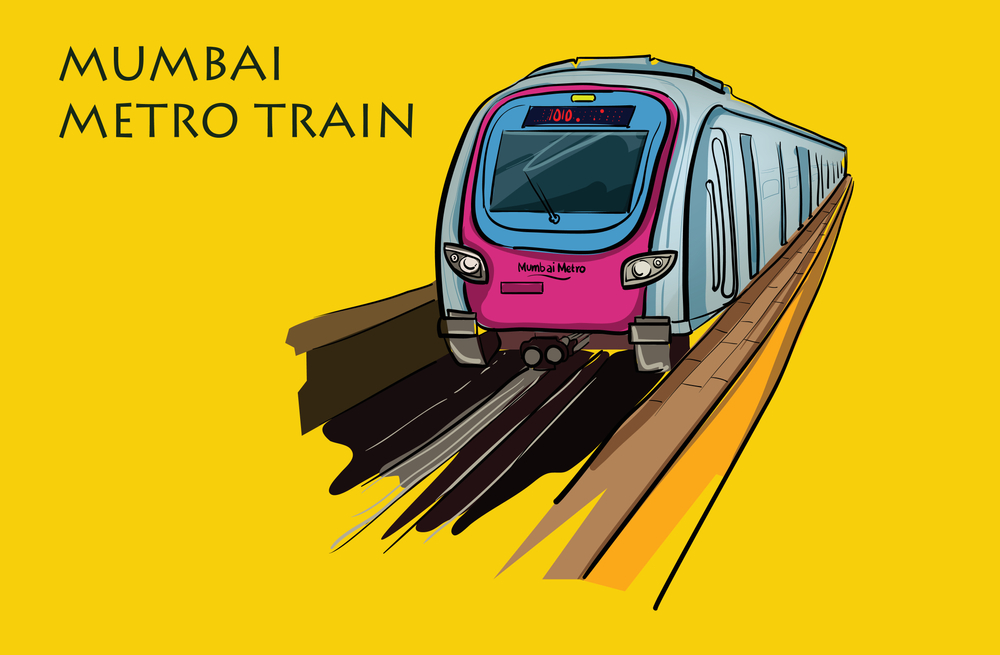
Mumbai Metro began operations in 2006 with the goal of improving connectivity throughout the Mumbai Metropolitan Region. Follow this blog to learn about the routes and stations of the Mumbai Metro network.
Know All About Mumbai Metro
The Mumbai Metro is the Maharashtra government’s ambitious and massive infrastructure project. Once fully operational, the Mumbai metro will offer citizens seamless, affordable, and comprehensive connectivity options. The Mumbai Metro project is being implemented by the Mumbai Metropolitan Development Authority (MMRDA). However, the Mumbai Metro Rail Corporation Limited (MMRCL) manages the entire underground stretch of the Mumbai Metro, known as Mumbai Metro Line 3 (MML-3).
The Maharashtra government began implementing the Mumbai metro project in 2006 in response to the already overburdened Mumbai local train system. However, due to delays in land acquisition, environmental clearances, and project approvals, only one line of the Mumbai Metro is operational: Versova-Andheri-Ghatkopar.
Metro 2A and Metro Line 7 are two metro routes nearing completion, and safety trials are underway. The remaining Mumbai Metro lines are in various stages of construction. In this article, we’ll go over Mumbai metro routes, lines, stations, and corridor details.
Mumbai Metro Route Map
The majority of Mumbai Metro lines are under construction and will be completed in phases. The broad route map of the Mumbai Metro is as follows.

Mumbai Metro Lines: Stations, Corridors, and Connections
Currently, the Mumbai Metro Lines can be classified into three broad categories:
Operational Metro Lines
Under Construction Metro Lines
Proposed/Approved Metro Lines
The Mumbai Metro lines can be summarized as follows:
| Metro Line | Colour Code | Metro route | Total Length (in Km) | Number of Stations | Construction Status |
| Mumbai Metro Line-1 | Blue Line | Versova – Andheri – Ghatkopar | 11.4 Km | 12 | Operational |
| Mumbai Metro Line-2A | Yellow Line | Dahisar (E) to DN Nagar | 18.60 Km | 17 | Operational |
| Mumbai Metro Line-2B | Yellow Line | DN Nagar to Mandale | 23.64 Km | 22 | Under Construction |
| Mumbai Metro Line-3 | Aqua Line | Cuffe Parade -Bandra Kurla Complex (BKC)- SEEPZ- Aarey Colony | 33.50 Km | 27 | Under Construction |
| Mumbai Metro Line-4 | Green Line | Wadala to Kasarawadavali | 32.32 Km | 32 | Under Construction |
| Mumbai Metro Line-4A | Green Line | Kasarvadavali –to Gaimukh (Extension of Line-4) | 2.88 Km | 2 | Under Construction |
| Mumbai Metro Line-5 | Orange Line | Thane – Bhiwandi – Kalyan | 24.95 Km | 17 | 12.811 km Under Construction; Rest of the project is on Hold |
| Mumbai Metro Line-6 | Pink Line | Swami Samarth Nagar – Vikhroli | 15.18 Km | 13 | Under Construction |
| Mumbai Metro Line-7 | Red Line | Dahisar (E) – Andheri (E) | 16.5 Km | 14 | Operational |
| Mumbai Metro Line-7A | Red Line | Andheri (E) – CSI Airport (Extension of Line-7) | 3.17 Km | 2 | Under Construction |
| Mumbai Metro Line-8 | Gold Line | CSIA – NMIA (Airport Connector) | 35 Km | 7 | Proposed Line |
| Mumbai Metro Line-9 | Red Line | Dahisar (E) – Mira Bhayander (Extension of Line-7) | 11.38 Km | 8 | Under Construction |
| Mumbai Metro Line-10 | Green Line | Gaimukh – Shivaji Chowk in Mira Road (Extension of Line-4) | 9.20 Km | 4 | Approved Line |
| Mumbai Metro Line-11 | Green Line | Wadala – Chhatrapati Shivaji Maharaj Terminus (Extension of Line-4) | 12.77 Km | 10 | Proposed |
| Mumbai Metro Line-12 | Orange Line | Kalyan to Taloja (Extension of Line-5) | 20.7 Km | 17 | Proposed |
| Mumbai Metro Line-13 | Purple Line | Shivaji Chowk (Mira Road) to Virar | 23 Km | 20 | Proposed |
| Mumbai Metro Line-14 | Magenta Line | Kanjurmarg to Badlapur | 45 Km | 40 | Proposed |
Mumbai Metro’s operational metro lines
Most of the Mumbai Metro Corridors are in various stages of construction. As of March 2022, only one line of the Mumbai Metro, the Versova-Andheri-Ghatkopar or Blue Line, was operational. Here is a detailed overview of the Mumbai Metro’s various corridors.
Line 1 of the Mumbai Metro, Versova-Andheri-Ghatkopar route, is blue.
According to Mumbai Metropolitan Region Development Authority officials, the metro on Mumbai Metro Line 1 has begun operating at an increased speed of 80 kmph, up from 65 kmph. With increased passenger capacity, the metro makes 18 more trips per day.
Status – Operational
Length- 11.4 km
Number of stations- 12

Mumbai Metro Stations, Line 1
Mumbai Metro Line 1 passes through the following route and includes the following stations:
| Sr. No | Mumbai Metro Line 1 Stations |
| 1 | Versova |
| 2 | D N Nagar |
| 3 | Azad Nagar |
| 4 | Andheri |
| 5 | Western Express Highway (WEH) |
| 6 | Chakala |
| 7 | Airport Road |
| 8 | Marol Naka |
| 9 | Saki Naka |
| 10 | Asalpha |
| 11 | Jagruti Nagar |
| 12 | Ghatkopar |
The Mumbai Metro’s Line 1 from Versova to Ghatkopar cost an estimated Rs 4,300 crore to build. Line 1 of the Mumbai Metro is completely elevated. Currently, it is operated by Mumbai Metro One Operation Pvt Ltd.
Mumbai Metro is under construction. Metro lines
The following Mumbai metro lines are currently under construction and in various stages of development.
Mumbai Metro Line 2 (2A and 2B): Yellow Line from Dahisar to Mandale
Status: Under Construction
Length- 42 km
Number of stations- 37 (2A-17, 2B-20)
Mumbai Metro Stations Line 2
Mumbai Metro Lines 2A and 2B pass through the following route and include the following stations:
| Sr. No | Mumbai Metro Line 2A Stations | Mumbai Metro Line 2B Stations |
| 1 | Dahisar East | ESIC Nagar |
| 2 | Upper Dahisar Station (Anand Nagar) | Prem Nagar |
| 3 | Kandarpada (Rushi Sankul) | Indira Nagar |
| 4 | Mandapeshwar (IC Colony) | Nanavati Hospital |
| 5 | Eksar (LIC Colony) | Khira Nagar |
| 6 | Borivali West (Don Bosco) | Saraswat Nagar |
| 7 | Pahadi Eksar (Shimpoli, Shimpawali) | National College |
| 8 | Kandivali West (Mahavir Nagar) | Bandra Metro |
| 9 | Dahanukarwadi (Kamraj Nagar) | ITO Bandra Kurla Complex |
| 10 | Valnai (Charkop) | IL&FS, Bandra Kurla Complex (BKC) |
| 11 | Malad West | MTNL, Bandra Kurla Complex (BKC) |
| 12 | Lower Malad (Kasturi Park) | SG Barve Marg |
| 13 | Pahadi Goregaon (Bangur Nagar) | Kurla East |
| 14 | Goregaon West | Eastern Express Highway (EEH) |
| 15 | Oshiwara (Adarsh Nagar) | Chembur |
| 16 | Lower Oshiwara (Shastri Nagar) | Diamond Garden |
| 17 | Andheri West (D.N. Nagar) | Shivaji Chowk |
| 18 | BSNL | |
| 19 | Mankhurd | |
| 20 | Mandala |
The yellow line is one of the longest on the Mumbai Metro network. It’s been divided into two parts. Line 2A connects Dahisar East Station to D N Nagar, while Line 2B connects ESIC Nagar to Mandale locality.
Yellow line 2A is approximately 18.5 kilometres long, while yellow line 2B is longer than 23 kilometres. The Yellow Line is being built in multiple phases at a cost of more than Rs 17,000 crore. Interestingly, Line 2 will be a fully elevated metro network.
On January 19, 2023, Prime Minister Narendra Modi inaugurated Metro Line 2A. The queue will be open to the public on January 20, 2023. It has reduced traffic on the Western Express Highway and Link Road while covering the approximately 18.6-kilometer distance between Dahisar East and DN Nagar in Andheri West.
Mumbai Metro Line 3 route: Aqua-Line from Cuffe Parade to Aarey Colony.

Status : Under Construction
Length- 33.5 km
Number of stations- 27 stations (26 underground and 1 at-grade)
The Mumbai Metro Line 3 (also known as the Colaba-Bandra-SEEPZ Line) is an underground rail system. The 33.5-kilometer line connects Cuffe Parade and Aarey Colony via 27 stations.
Key Details
The Mumbai Metro Line 3 is jointly owned and operated by the Government of India and Maharashtra on a 50-50 basis.
The Mumbai Metro Line 3 is scheduled to be completed in 2024, with the first phase connecting Mumbai’s financial hubs, including Colaba, Bandra Kurla Complex (BKC), and Aarey.
The Mumbai Metro Line 3 has underground stations with concourses 10-14 metres below ground level and platforms 18-20 metres below ground level, so mobile connectivity may be an issue for commuters. MMRC has thus contracted ACES India Pvt Ltd to provide In-Building Solutions.
On October 8, Mumbai Metro 3 completed a trial run between MIDC and Vidyanagari metro stations.
Latest Update
The Mumbai Metro Rail Corporation (MMRC) has received the final rake from Alstom for the Mumbai Metro Line 3 Colaba-Bandra-Seepz line.
The MMRC now has all of the rakes required to start Phase I of the line between Aarey and the Bandra-Kurla Complex. Rake trials will take place around mid-November 2023, following which CMRS will inspect the network.
Mumbai Metro Stations Line 3
Mumbai Metro Line 3, also known as the Aqua Line, will run from South Mumbai’s Cuffe Parade to North Aarey Colony. The Aqua Line’s network will include the following stations:
| Sr. No | Mumbai Metro Stations List Line 3 (Aqua Line) |
| 1 | Cuffe Parade |
| 2 | Vidhan Bhawan |
| 3 | Churchgate station |
| 4 | Hutatma Chowk Statin |
| 5 | CST Station |
| 6 | Kalbadevi |
| 7 | Girgaon Station |
| 8 | Grant Road |
| 9 | Mumbai Central |
| 10 | Mahalaxmi |
| 11 | Science Museum Station |
| 12 | Acharya Atrey Chowk |
| 13 | Worli |
| 14 | Siddhivinayak Temple |
| 15 | Dadar |
| 16 | Shitladevi Temple |
| 17 | Dharavi |
| 18 | Income Tax Office BKC |
| 19 | Vidyanagri |
| 20 | Santa Cruz Station |
| 21 | Mumbai Domestic Airport |
| 22 | Sahar Road |
| 23 | Mumbai International Airport |
| 24 | Marol Naka |
| 25 | MIDC Station |
| 26 | SEEPZ |
| 27 | Aarey Colony (At-grade) |
The Aqua line, which passes through both CST station and the International Airport of Mumbai, will be one of Mumbai Metro’s most important metro lines once operational.
Mumbai Metro Line 4: Green Line from Wadala to Kasarvadavali.
Status: Under Construction
Length- 33.3 km
Number of stations- 32 stations
Mumbai Metro Stations Line 4
Mumbai Metro Line 4 (Green Line) will run from Wadala to Aarey Colony. The Mumbai Metro’s Greenline will pass through the stations listed below.
| Stations on Green Line 4 of Mumbai Metro | |||||||
| Kasarvadavali | Vijay Garden | Dongripada | Tikuji-ni-wadi | Manpada (Thane) | Kapurbawdi | Majiwada | Cadbury Junction |
| Mahapalika Marg | RTO Thane | Teen Haath Naka (Thane) | Mulund Naka | Mulund Fire Station | Sonapur | Shangrila | Bhandup |
| Bhandup Mahapalika | Naval Housing | Gandhi Nagar | Surya Nagar | Vikhroli | Godrej Company | Shreyas Cinema | Laxmi Nagar |
| Pant Nagar | Garodia Nagar | Amar Mahal Junction | Siddarth Colony | Suman Nagar | Anik Nagar Depot | Wadala Truck Terminal | Bhakti Park Wadala |
In addition to the stations mentioned above on the Mumbai Metro’s Green Line 4, two more stations are planned along the route. The planned stations are Gowniwada and Gaimukh. The total project cost of Greenline 4 (including 4A) exceeds Rs 15,500 crore.
Mumbai Metro Route – Line 5: Orange Line from Thane, Bhiwandi, and Kalyan
Status : Under Construction
Length- 25 km
Number of stations- 17 stations
Mumbai Metro Stations Line 6
Mumbai Metro Line 5, also known as the Orange Line, will run from Thane City to Kalyan. The Mumbai Metro’s orange line will run through the following stations.
| Kalyan APMC | Kalyan Station | Sahajanand Chowk | Durgadi Fort | Kon Gaon | Gove Gaon MIDC | Rajnouli Village | Temghar | Gopal Nagar |
| Bhiwandi | Dhamankar Naka | Anjur Phata | Purna | Kalher | Kasheli | Balkumbh Naka |
The Mumbai Metro’s Orange Line 5 will cost an estimated Rs 8,417 crore. The orange line will be completely elevated and cover a distance of 25 kilometres. To improve connectivity, Orange Line 5 will connect to Metro Line 4 on the Wadala-Thane route and Metro Line 11 on Taloja and Kalyan.
Mumbai Metro Route – Line 6: Pink Line at Lokhandwala-Jogeshwari-Kanjurmarg
Status : Under Construction
Length- 14.5 km
Number of stations- 13 stations
Mumbai Metro Stations Line 6
| Sr. No | Mumbai Metro Line 6 Stations List |
| 1 | Swami Samarth Nagar (Lokhandwala) |
| 2 | Adarsh Nagar |
| 3 | Jogeshwari West |
| 4 | JVLR Junction |
| 5 | Shyam Nagar |
| 6 | Mahakali Caves |
| 7 | SEEPZ Village |
| 8 | Saki Vihar Road |
| 9 | Rambaug (Powai) |
| 10 | Powai Lake |
| 11 | IIT Powai |
| 12 | Kanjurmarg West |
| 13 | Vikhroli EEH |
Mumbai Metro Line 6, also known as the Pink Line, will connect Swami Samarth Nagar and the Kanjurmarg route. The majority of the Pink Line will be fully elevated along the Jogeshwari-Vikhroli Link Road. The entire project will cost an estimated Rs 6716 crore.
Mumbai Metro Route 7 & 7A: Red Line from Dahisar East to Mumbai Airport.
Status: Under Construction
Length- 33.5 km
Number of stations- 16 stations
Mumbai Metro Stations Line 7
The Red Line of the Mumbai Metro will have the following stations:
| Mumbai Metro Stations Red Line (7 & 7A) | ||
| Dahisar East | Ovaripada | National Park |
| Devipada | Magathane | Mahindra and Mahindra |
| Bandongri | Kurar Village | Dindoshi |
| Aarey Road Junction | Mahanand (Goregaon East) | JVLR Junction |
| Shankarwadi/Mogarpada | Andheri East (Gundavali) | Airport Colony (7A) |
| CSMIA T2 (7A) | ||
The total length of the Red line will be more than 33.5 kilometres. The red line, which connects Mumbai’s international airport, will be extremely beneficial to commuters from all over Mumbai.
On January 19, 2023, Prime Minister Narendra Modi inaugurated Metro Line 7. The queue opened to the public on January 20, 2023. It has reduced traffic on the Western Express Highway and Link Road while covering the approximately 16.5-kilometer distance between Andheri East and Dahisar East.
Mumbai Metro Route: Line 8: Gold Line from CSIA to NMIA (Airport Connector).
The Gold Line, one of the most ambitious and futuristic metro lines ever built, will connect Mumbai International Airport to Navi Mumbai Airport. The approximate length of this connector project is more than Rs 15,000 crore. The Gold Line metro route will include more than 8 stations.
Mumbai Metro Route 9: Red Line from Dahisar East to Mira-Bhayander (Under Construction)
Metro Line 9 of the Mumbai Metro is an extension of Line 7. The Red Line 9 will connect Dahisar East and Mumbai’s Bhayander region.
| Mumbai Metro Red Line 9 Stations | |||
| Dahisar East | Pandhurang Wadi | Amar Palace | Zankar Company |
| Sai Baba Nagar | Deepak Hospital | Shaheed Bhagat Singh Garden | Subhash Chandra Bose Station |
This Mumbai metro stretch will include more than eight stations, all of which will be elevated. The total cost of the red line stretch is estimated to be approximately Rs 6,518 crore.
Mumbai Metro Route: Line 10, 11 (Extension of Red Line 4)
Mumbai Metro Lines 10 and 11 are extensions of the Mumbai Metro Line 4. The proposed Red Line 10 will connect Gaimukh to Shivaji Chowk on Mira Road. It will be a 9-kilometer stretch with 9 metro stations in total. Metro Line 10 will cost around Rs 5,000 crore to build.
Similarly, red Line 11 will connect Wadala and the CSMT area. This stretch will be 12.7 kilometres long and will include approximately 11 metro stations. The approximate cost of developing this stretch is Rs 8,739 crore.
Mumbai Metro Route: Line 12: Orange Line
This Mumbai Metro stretch will be built as an extension of Mumbai Metro Line 5 (the Orange Line). Line 12 will connect the cities of Kalyan and Taloja. This route will provide last-mile connectivity throughout the Mumbai Metropolitan Region.
Mumbai Metro Line 13: Purple Line
This metro line will connect the Virar area to Mira Bhayander. The stretch will be more than 23 kilometres long and will cost Rs 6900 crore. It will be called the Purple Line Metro. The number of stations along the stretch is yet to be determined.
Mumbai Metro Route 14: Magenta Line
Mumbai Metro Line 14 is a proposed metro line that would connect Kanjurmarg to Mumbai’s Vikhroli area. It will extend to the Ambernath-Badlapur region, connecting Mumbai with areas beyond Thane. The stretch will cost approximately Rs 13,500 crore to complete.
Deadlines for New and Existing Mumbai Metro Lines
As of January 2024, construction of several Mumbai Metro lines is currently underway.
60% of the work on elevated Metro Line 2B has been completed so far, with an expected deadline of June 2025.
Metro Lines 4 and 4A cover a distance of 35.2 km and are expected to be completed by mid-2025.
The initial phase of Metro Line 5 is nearly completed, with a deadline of December 2025.
Metro Line 6 has made approximately 73.25% progress in overall civil work completion, with an expected completion date of December 2024.
Metro Line 7A progress is at 24.24%, with a tunnelling completion deadline of December 2024 and commercial operations in 2025.
Metro Line 9 has reached a 77% completion milestone and is expected to be ready in June 2025.
Tendering for civil work on Metro Line 12 is ongoing, as is forest clearance.
Navi Mumbai Metro
The City and Industrial Development Corporation (CIDCO) is implementing and overseeing the Navi Mumbai metro project, which is part of the area’s rapid transit system. The Navi Mumbai Metro will have 20 stations along its 23-kilometer stretch. The entire project will cost Rs. 4,163 crore.
Mumbai Metro Frequency
Mumbai Metro operates 398 weekly trips on average per day, with a service frequency of 3-4 minutes during peak hours and 7-8 minutes during off-peak hours.
Ridership Details of Mumbai Metro
On September 27th, 2023, the Mumbai Metro set a daily ridership record with 4,79,333 passengers. It is the metro system’s highest single-day ridership.
Prior to the pandemic, Mumbai Metro had an average weekday ridership of 4,40,000 to 4,50,000 commuters. However, the pandemic caused a temporary halt in operations that lasted 211 days, from March 22nd to October 18th, 2020.
The metro system resumed operations on October 19th, 2020, with innovative strategies such as:
pillar poster campaign.
a society’s contact program
Promote digital payments for commuter convenience to increase ridership.
By the end of the fiscal year 2020-2021, daily ridership had reached 2,000,000.
Ridership has been increasing since April 2022, and will reach 4,00,000 by the end of the fiscal year.
Types of Tickets for the Mumbai Metro
Tokens and Smart Cards are provided to passengers by the Mumbai Metro.
Tokens
A token is a pre-paid ticket that passengers can buy for a single journey. It is valid for one day, from the time of purchase until the end of business hours.
Once you’ve entered the system (tapped the token in the paid area), you must leave the same station within 20 minutes or the destination station within 75 minutes.
Paper Ticket
Paper tickets are an excellent choice for those who prefer a more traditional method of purchasing tickets.
The ticket is pre-paid and valid for single or return trips between a predetermined number of stations listed on the fare chart.
It is intended for occasional metro users and is valid for one business day until the end of operational hours on that day.
It is important to note that the journey must begin within two hours of purchase.
Mobile QR Ticket Code
Commuters can use their mobile phones as tickets by scanning QR codes. This feature is available on the PayTM and Ridlr apps, and “Skiiip Q” allows commuters to book their tickets online, saving them time and the hassle of purchasing paper tickets.
Smart Card
You can buy a smart card at any Mumbai Metro station’s Customer Care counter. You must pay a Rs. 50 security deposit and then recharge it with an additional Rs. 100/200/300/500 or 1000.
Each time you tap your card on the exit gate, the cost of your journey (from one station to another) is deducted from it.
The token is ideal for infrequent travellers, while a Smart Card is the best option for those who travel frequently.
One Card
Mumbai One Card allows you to make payments through the OneCard app. One Card is a convenient payment method that can be used for everything from UPI and Debit Cards to Net Banking.
The transition to using the Mumbai One Card brings benefits such as:
Commuters benefit from convenience and a greener environment by reducing the use of paper tickets.
How to Recharge the Mumbai Metro Card Online?
You can quickly recharge your Mumbai Metro card using the Reliance Metro website or a digital payment app such as Google Pay, Paytm, etc. Here’s a step-by-step guide for recharging your Mumbai metro card:
Reliance Mumbai Metro
To recharge your Mumbai metro card online using the website, follow the steps below:
Step 1: Go to the Reliance Mumbai Metro website (https://www.reliancemumbaimetro.com/index).
Step 2: Select Instacharge and provide your card number, recharge amount, name, address, email address, and mobile number. Please enter captcha.
Step 3: Click Confirm.
Step 4: Enter the amount and pay with a credit card, debit card, or UPI ID.
You can now use the card after the payment has been successfully completed.
Digital Payment Application- Paytm
To recharge your Mumbai metro card using Paytm, follow the steps below:
Step 1: Open the Paytm app on your phone.
Step 2: In the All Services section, click on Metro, then Mumbai Metro.
Step 3: Select Smart Card Recharge and enter your card number.
Step 4: Now, click Proceed.
Step 5: Make a payment with a credit card, debit card, or Paytm wallet balance.
Smart Bands for Ticketless Travel in Mumbai Metro
Maha Metro will begin using smart bands as a new payment method for travel. These smart bands will improve passenger convenience by preventing them from standing in long lines to get a ticket.
These bands will now be implemented on Metro line 2A, which runs from D.N. Nagar to Dahisar, as well as Mumbai Metro line 7, which runs from Andheri East to Dahisar. In April, these smart bands were introduced in Mumbai Metro One, also known as the Reliance Metro from Versova to Ghatkopar.
Mumbai Metro: Contact Information
For any further information, you can contact at the following address or send a mail to the given mail id:
Office Address: Mumbai Metro Rail Corporation Limited,
202, 2nd Floor and 801 & 803, 8th Floor,
Hallmark Business Plaza,
Opp. Gurunanak Hospital,
Sant Dnyaneshwar Marg,
Bandra (East), Mumbai – 400 051
E-mail Address: contact@mmrcl.com
Latest news and updates on the Mumbai Metro
Mumbai Metro Underground Set to Start Operations on July 24
June 25, 2024: To alleviate traffic congestion on Mumbai’s roads, the Mumbai Metro will launch its first underground metro on July 24. The project spans 33.5 kilometres and costs Rs 37,000 crores. The underground tunnel begins in Aarey Colony and ends at the Bandra-Kurla Complex. This route will include 27 stations, 26 of which will be underground.
Facts about Mumbai. The Metro Aarey Colony to BKC route
Prepare for a new era of efficient transport! The Mumbai Metro’s Aarey Colony to BKC route will see 260 metro operations per day, ensuring a smooth and convenient commute for everyone. The metro will operate from 6:30 a.m. to 11:00 p.m.
Metro speed will be 90 km per hour.
Imagine how much time you could save! The new Mumbai Metro route will cut the travel time from Aarey Colony to BKC from two hours to 50 minutes. This substantial time savings will undoubtedly improve the quality of life for many commuters. Station names include Cuffe Parade, Vidhan Bhavan, Churchgate, Hutatma Chowk, CST Metro, Kalabadevi, Girgaon, Grant Road, Mumbai Central Metro, Mahalaxmi, Science Museum, Acharya Atre Chowk, Worli, Siddhivinayak, Dadar, Sitaladevi, Dharavi, BKC, Vidyanagari, Santacruz, Domestic Airport, Sahar Road, International Airport, Marol Naka, MIDC, SEEPZ, and Aarey Depot.
Summing Up: Mumbai Metro
The Mumbai Metro provides a connectivity solution for the city’s growing population and rapid urbanisation. Once fully operational, the Mumbai metro will provide citizens with a fast, cost-effective, and seamless mode of transportation.